Painting
November 5, 2025
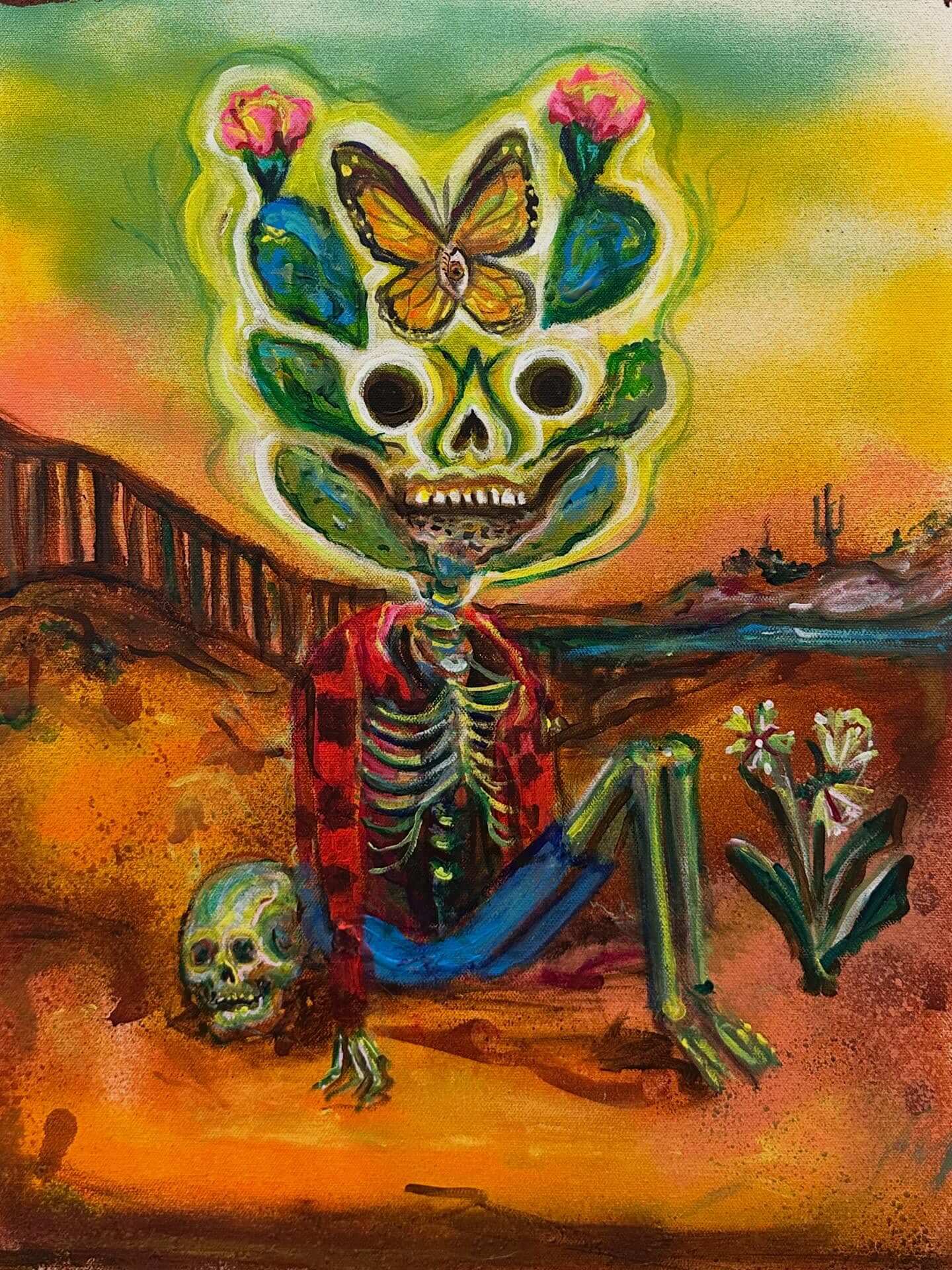
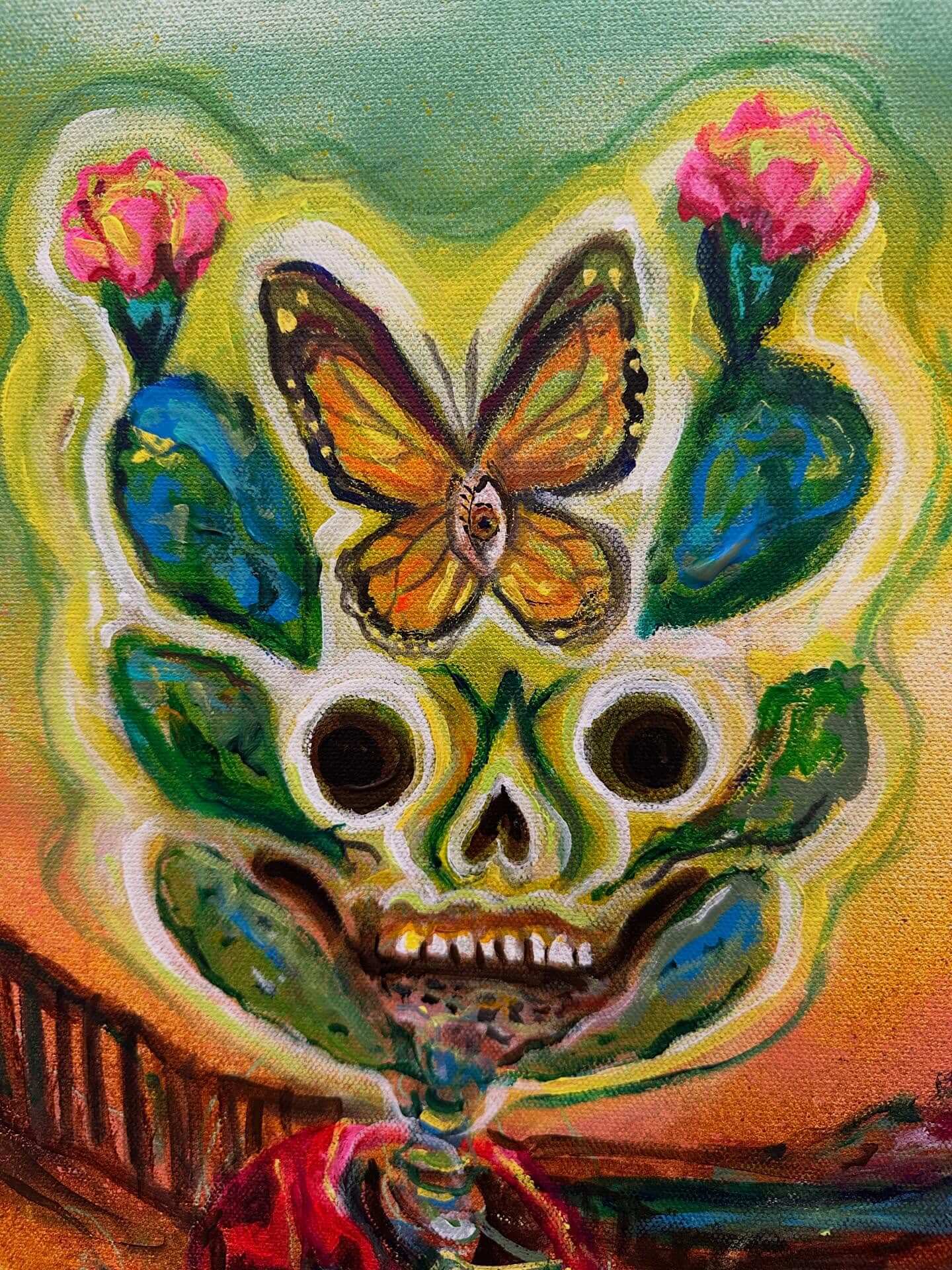
“El Árbol” symbolizes the profound sacrifice many make in the journey toward a better future. Set against a landscape once known as Aztlán, the piece recalls the region’s pre-colonial roots and deep Indigenous heritage. The presence of the milkweed flower highlights the environmental toll that the border has taken on these natural landscapes, marking a contrast between what once was and what remains. At the center, a perished figure decomposes and returns to the earth revealing the spiritual and ecological interconnectedness of body, land, and energy. This transformation honors our ancestors and affirms that migration is not only a human right but a sacred, natural process. From loss, new life takes root a testament to resilience, cultural survival, and the enduring power of hope.
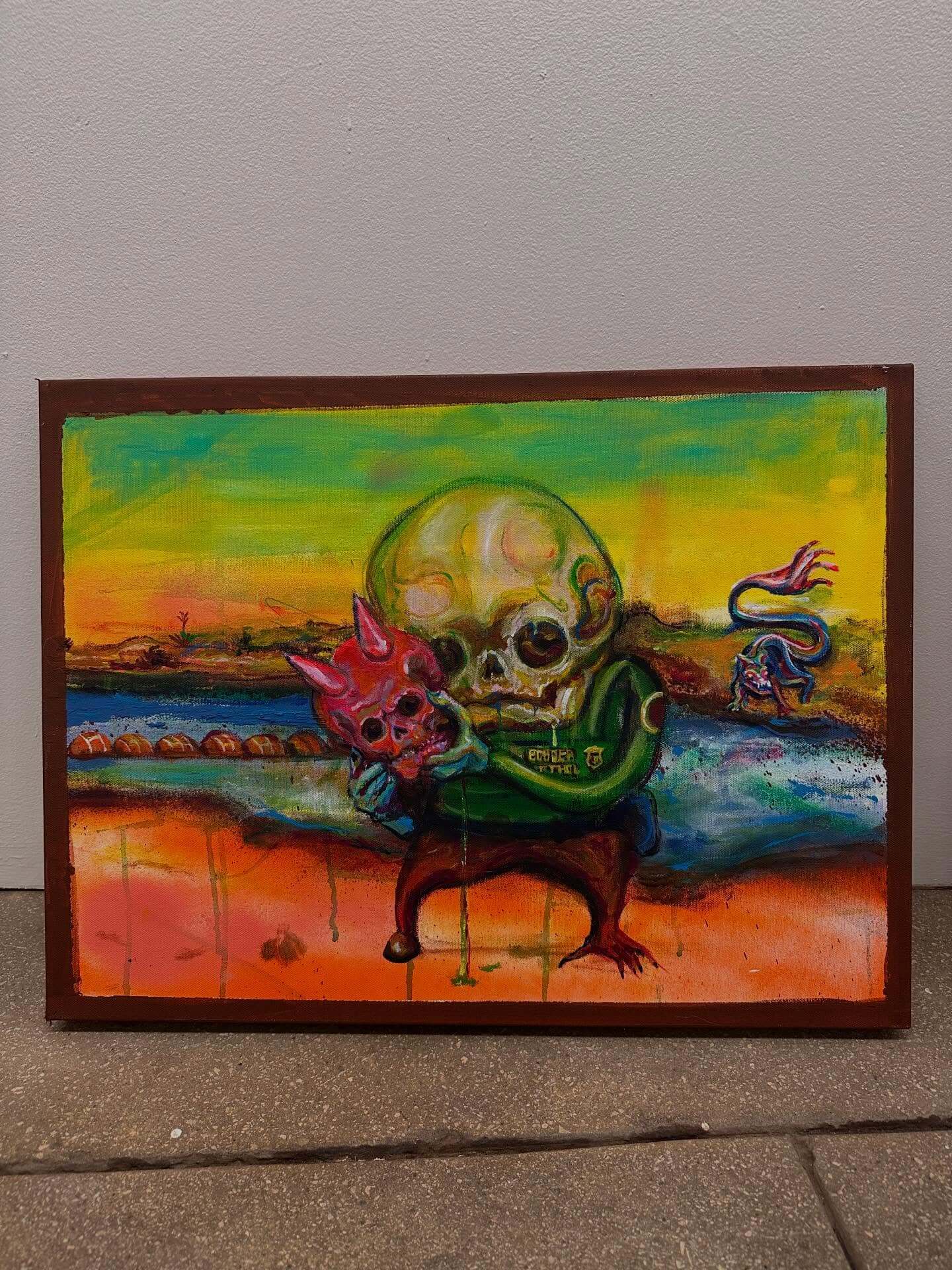
“El Rio De Los Muertos”
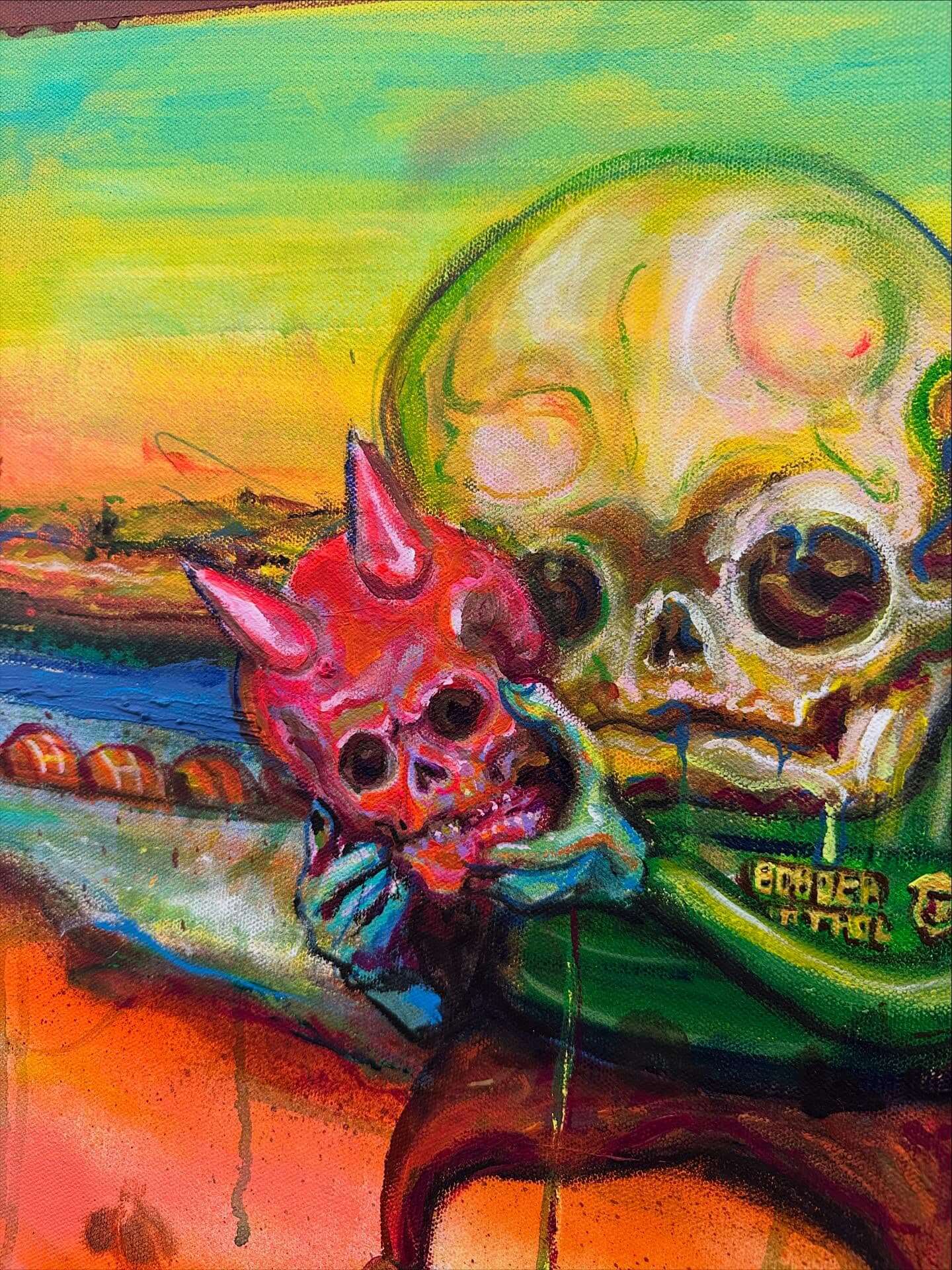
This painting stands in stark contrast to El Árbol, centering on a haunting image. A border patrol devil removing his mask to reveal a decomposed, alien like figure. This unveiling symbolizes the moral decay fueled by greed and the dehumanizing effects of capitalism. It exposes how systemic forces twist identity, stripping away humanity in pursuit of control and profit.
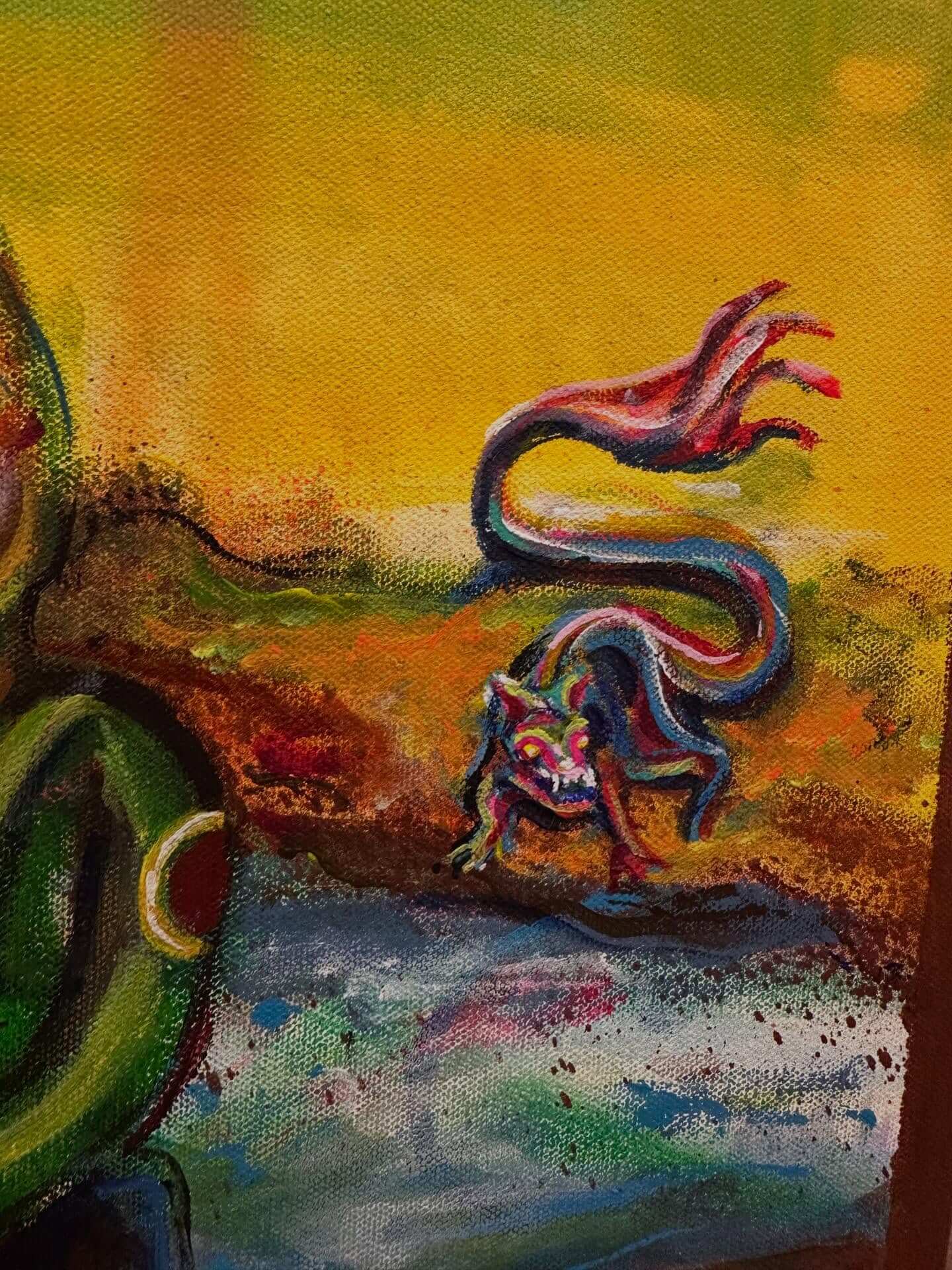
The Ahuizotl a legendary river creature known for luring and capturing the unwary. Here, the Ahuizotl becomes a symbol of ancestral justice and collective power. Rather than representing fear, it embodies care, community, and cultural memory. Its presence is a reminder that our roots run deep that despite attempts to erase or corrupt our heritage, our culture remains a force of resilience, resistance, and hope.